

First Responder Burnout: How to Spot It and Stop It Early
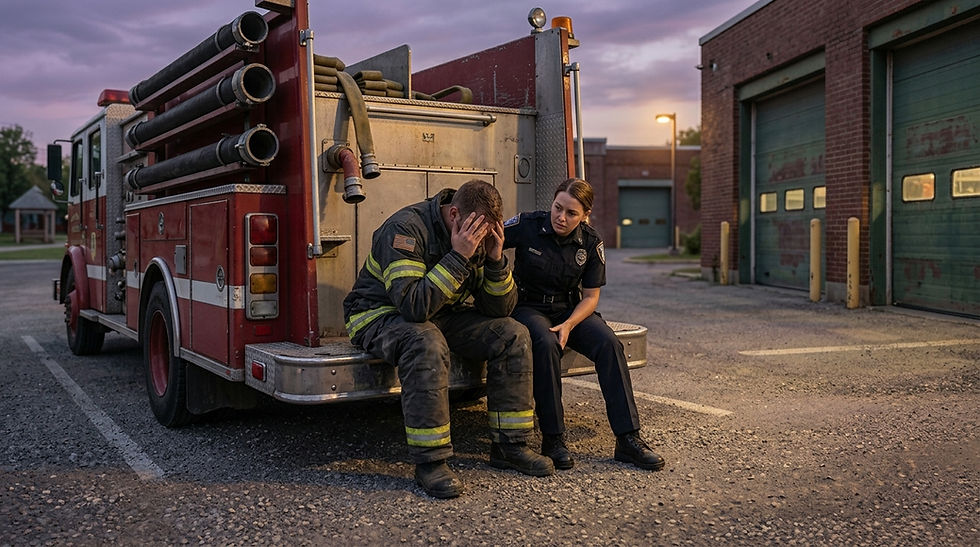
There was a time this job felt worth looking forward to. Now you find yourself counting down the hours instead. Little things set off a temper that never used to be this short, a slow driver, a simple question from a coworker, shoes left in the hallway. Rest doesn't seem to fix it anymore.
That's not just being tired. That's burnout, and it's one of the most common things a career in this field quietly builds up, until it catches up with you all at once.
Burnout is what happens when the gap between who you are and what the job keeps demanding gets too wide for too long. It usually shows up as emotional exhaustion, feeling completely used up, or as a kind of numbness where the people around you, including yourself, start to feel like problems to manage instead of human beings.
It doesn't happen overnight. It tends to move through three phases. First comes alarm, your body's fight-or-flight response kicking in, useful and short-lived. Then comes resistance, where a lot of first responders live for years, pushing hard calls down and telling themselves they're handling it. Often you are, for a while, but feelings pushed down tend to leak out sideways instead, as a short temper or pulling away from the people who care about you. Exhaustion is what happens if the stress stays heavy long enough without support, and it's where first responder burnout does its real damage. It's been linked to cardiovascular disease, digestive problems, and other health issues, along with a higher risk of anxiety, depression, and post-traumatic stress. Left unaddressed, the signs tend to show up in the work itself too: more sick days, more friction on the job, and a much higher chance of walking away from work that once felt worth showing up for.
Cynicism, harsh judgment of coworkers or family, a growing sense of disconnection, a short fuse, feeling like nothing helps anymore, unhealthy coping like more drinking or skipped meals, and trouble sleeping are all common signs worth watching for in yourself. None of it means something is wrong with your character. It's information.
A lingering stigma still convinces a lot of first responders that struggling means being too weak for the job. That mindset is slowly changing, but it hasn't disappeared. Isolation only makes burnout worse, convincing you that nobody else understands what you're carrying. That's rarely true. Needing help after carrying this weight for a long time isn't weakness. It's fatigue, the honest, physical kind, and reaching out before you run completely empty is the strength move.
So where do you actually start? Give yourself an honest self-check. Dread going to work, the Sunday-night blues, constant fatigue, irritability, trouble concentrating, and reaching for alcohol or food to cope are all common signs. Noticing several of these at once is useful information about where you stand, not a verdict on who you are. From there, build the habit of a daily stress check, rating your stress on a 0 to 10 scale once a day so you notice where things stand before you hit exhaustion. Protect ten minutes a day for yourself, too: fresh air, a call to someone outside of work, a short stretch, a song that actually feels good. Small deposits back into yourself add up more than they seem like they should. And when you do get time off, make it real time off. Rest that actually restores usually means getting away from work entirely, mentally as well as physically, even if it's only for a short stretch. Lastly, reach out to a peer or a group if you want to talk to someone "who gets it". Sometimes their acknowledgement is all you need to start feeling better.
Frequently Asked Questions
What are the three phases of burnout?
Alarm, the body's short fight-or-flight response; resistance, where a lot of first responders live for years while pushing hard calls down; and exhaustion, what happens if the stress stays heavy long enough without support.
What are common warning signs of burnout?
Cynicism, harsh judgment of coworkers or family, a growing sense of disconnection, a short fuse, feeling like nothing helps anymore, unhealthy coping like more drinking or skipped meals, and trouble sleeping.
Why do so many first responders wait to ask for help?
A lingering stigma still convinces a lot of people that struggling means being too weak for the job, and isolation makes it worse by convincing people nobody else understands what they're carrying. Needing help after carrying this weight for a long time is fatigue, not weakness.
SC4i is a statewide Colorado nonprofit that provides free, trauma-informed counseling, peer support, and wellness training to first responders and their families. Burnout is one of the resilience topics covered in depth in SC4i's upcoming Resilience Book, currently being written for first responders everywhere. If burnout sounds familiar, reach out. Visit sc4i.org or call (719) 822-3387.


Comments